Bristol harbourside and maritime heritage - a walking guide
The Floating Harbour made the city. A route through what is left of the working port.
Bristol's harbour is not one sight but a working landscape of docks, locks, warehouses and museums. This guide follows the water from the Cumberland Basin to the Arnolfini, explaining what each place was built for and what remains to see today.
The Floating Harbour
The Floating Harbour was created to solve a practical problem: the River Avon has a large tidal range, and ships could be left stranded at low tide. Engineers impounded water behind locks so vessels could float at all states of the tide. Today the harbour is still a waterway, with quays, bridges, warehouses and moored boats. Walk the edges and look for the stone walls, lock gates, and the way the water is held at a steady level. The harbour is also a place to notice Bristol's industrial past without needing a museum label at every step.
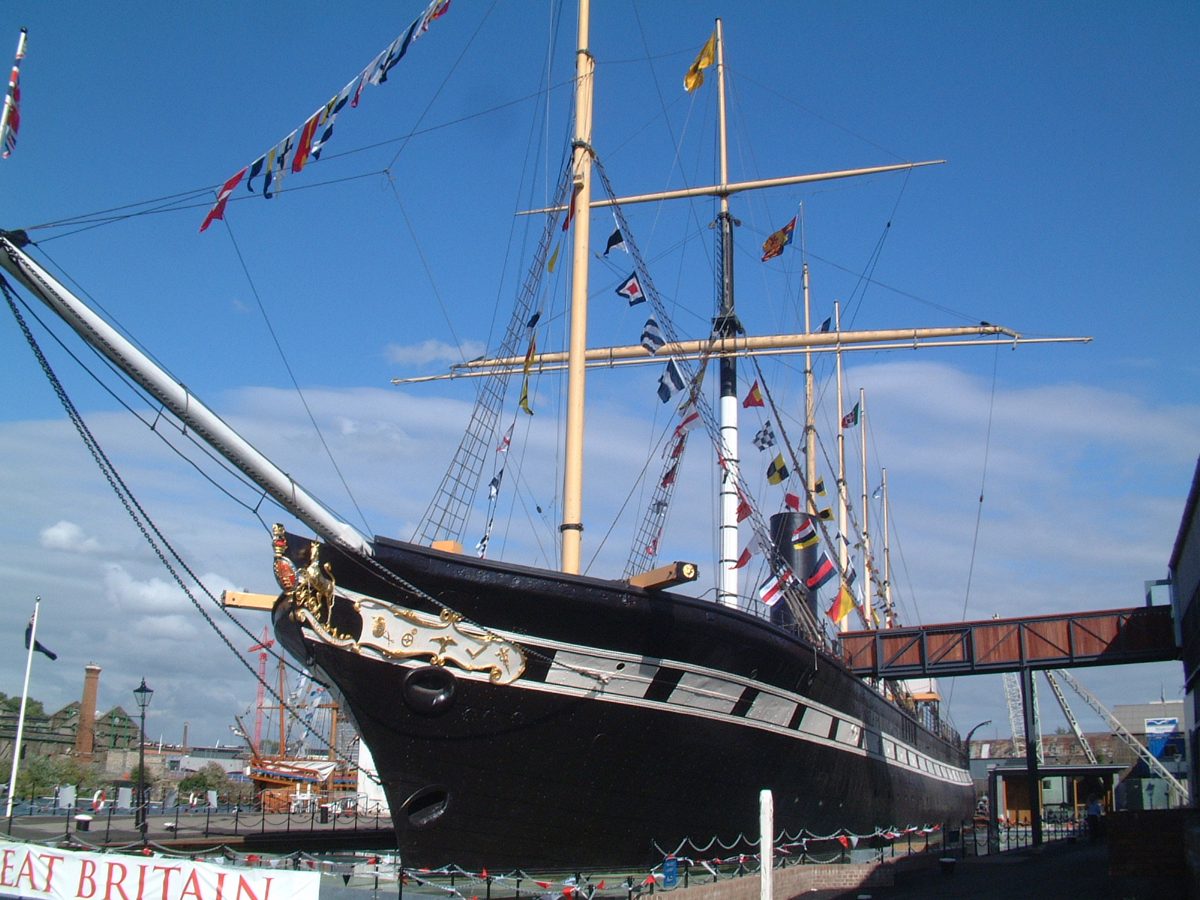
Brunel's SS Great Britain
Brunel's SS Great Britain was launched in Bristol in 1843 as an iron steamship with screw propulsion. It was built for long-distance passenger and cargo service and represented a major step in shipbuilding. The vessel survives in dry dock beside the harbour, where you can see its hull, deck arrangements and the scale of Brunel's engineering. Look closely at the iron plates, the propeller, and the way the ship sits in the dock that once launched it. The site also explains the ship's later working life and return to Bristol.
M Shed
M Shed occupies a former transit shed on the harbourside and tells the story of Bristol and its people. Its displays cover work, protest, migration, industry, culture and the city's maritime past. What survives is both the building and the collections: cranes, vehicles, photographs, documents and objects from everyday life. While walking, look at the harbour cranes outside and the museum's place among the old quays. Inside, the museum's treatment of Bristol's slave trade history is an essential part of understanding the port.
Underfall Yard
Underfall Yard was built as part of the harbour's engineering system, with pumping machinery and workshops that helped manage water levels and maintain the floating harbour. Today it survives as a working yard and heritage site, with historic machinery, boats, workshops and quayside activity. Look for the pumping station, the boatbuilding and repair work, and the industrial details that show how the harbour was maintained rather than merely used. It is one of the clearest places to see Bristol's port as infrastructure.
The Arnolfini
The Arnolfini is a contemporary arts centre on the harbourside, located in a converted warehouse building on Narrow Quay. It was not built for ships, but it shows how harbour warehouses have been reused for culture and public life. What survives is the industrial shell: brick, beams, large openings and waterside setting. While walking, notice the contrast between the arts centre and the working harbour outside. The building is a good example of Bristol's shift from cargo handling to cultural and leisure use.
The Cumberland Basin
The Cumberland Basin forms part of the entrance system to the Floating Harbour. It was built to manage the movement of ships between the tidal River Avon and the impounded harbour. Locks, bridges and basin walls survive, and the area still shows how a port controls water and traffic. Look at the lock gates, the swing bridges, and the changing water levels. This is the place where the harbour's engineering is most visible, because the movement between river and dock is still part of the landscape.
Port history and the slave trade
Bristol was one of the major English ports involved in the transatlantic slave trade. Ships from the city carried enslaved Africans to the Americas, and the profits and connections from that trade shaped buildings, institutions and wealth in Bristol. The city also had abolitionist voices and later campaigners who opposed slavery. A serious walk through the harbourside should include this history, not only cranes, ships and warehouses. M Shed is the most direct place to engage with it, but the wider harbour landscape also carries the legacy of merchant wealth and maritime commerce.
Frequently asked questions
What is the Floating Harbour?
The Floating Harbour is Bristol's impounded harbour, created so ships could remain afloat at all tides despite the large tidal range of the River Avon. It survives as the central waterway of the harbourside, with locks, quays, bridges and warehouses.
Why is Brunel's SS Great Britain important?
Brunel's SS Great Britain is important because it was an early iron steamship with screw propulsion, launched in Bristol in 1843. It survives in dry dock and shows the scale and ambition of nineteenth-century shipbuilding.
Where can I learn about Bristol's slave trade history?
M Shed is the key place on the harbourside for learning about Bristol's history, including the city's role in the transatlantic slave trade. Its displays place that history within the wider story of Bristol's people, work and port. - Start at the Cumberland Basin to understand the locks and river entrance. - Walk the Floating Harbour edges to see how the impounded waterway works. - Visit M Shed for the city's social and maritime history. - Look at Underfall Yard for harbour engineering and maintenance. - End near the Arnolfini to see warehouse reuse on Narrow Quay. - Read the SS Great Britain site for Brunel's shipbuilding legacy.
This is an independent member's guide compiled by Bristol Society. We are not affiliated with the venues and institutions mentioned; opening arrangements and programmes change - always confirm details on the official websites before making plans.
← Back to Events