Street art in Bristol - where to look and how to read it
Beyond one famous name: the streets, the festival and the walls that keep changing.
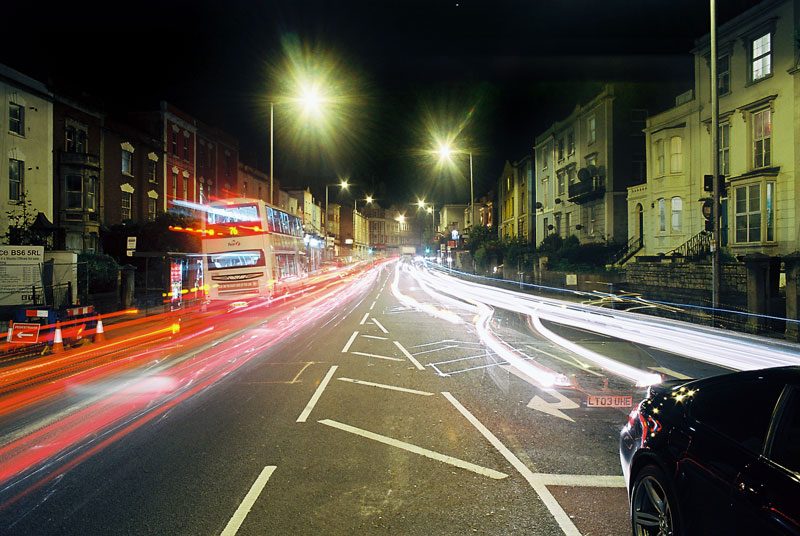
Bristol's street art is best understood as a shifting public gallery rather than a fixed collection. This guide covers Stokes Croft, Park Street, Nelson Street, North Street and Upfest, and the Bristol Museum and Art Gallery's 2009 Banksy exhibition, with the basic rule that walls change and no single piece should be treated as permanent.
Stokes Croft and Banksy's The Mild Mild West
Stokes Croft is one of Bristol's most recognisable street art corridors, known for large murals, political slogans, and paste-ups as well as for its independent businesses and community activism. Banksy's "The Mild Mild West" is the landmark most often associated with the area: a mural showing a teddy bear throwing a Molotov cocktail at riot police. It is widely cited as an early Banksy work and has become part of the visual identity of Stokes Croft. Because the area is active and frequently painted, the mural's surroundings may look different from older photographs. Treat any visit as a snapshot of a living street, not a checklist of fixed works.
Park Street and Well Hung Lover
Park Street, running between College Green and the Clifton area, is a busy central route where Banksy's "Well Hung Lover" appears on the side of a building near the street. The image of a naked figure hanging from a window ledge, with a suited man and a woman looking out, is one of Bristol's most photographed Banksy pieces. Its location on a prominent city-centre building has made it a regular stop on informal street art walks. As with all outdoor work, its condition, visibility, and surrounding context can change over time.
Nelson Street
Nelson Street has been a significant location for large-scale mural painting in Bristol, especially during periods when the city supported ambitious street art programmes. The street's tall buildings and central position have made it suitable for big pieces that can be seen from a distance. Visitors should look up as well as along the pavement, because some of the most striking work there has been placed high on walls. Nelson Street also illustrates how street art can shift from unofficial marking to planned, large-format public art without losing its connection to the city's wider graffiti culture.
North Street and Upfest
North Street in Bedminster is closely linked to Upfest, the street art and graffiti festival held in the area. Upfest has brought artists from Bristol and beyond to paint walls, shutters, and shop fronts, turning North Street and nearby streets into a concentrated route of murals. The festival has helped Bedminster become one of the city's main street art destinations, with work ranging from letter-based graffiti to figurative murals and abstract colour pieces. Because festival walls are often repainted, the route can feel new even to regular visitors.
Bristol Museum and Art Gallery and Banksy's 2009 Exhibition
The Bristol Museum and Art Gallery is important in this story not only as a conventional museum but as the site of Banksy's 2009 exhibition, commonly known as "Banksy versus Bristol Museum". The show took over the museum's spaces and placed Banksy's work among the museum's own collections, creating a deliberate contrast between institutional display and street art. It brought international attention to Bristol's role in Banksy's development and showed how a museum could temporarily become part of the street art conversation. The exhibition is now part of the city's cultural history rather than a current event.
Impermanence and how to look
Street art is impermanent by nature. Paint fades, walls are repaired, buildings are demolished, and new works cover older ones. Some pieces are removed by property owners or local authorities; others are damaged by weather or tagging. For that reason, this guide avoids claiming what is on any specific wall today. The useful approach is to walk with curiosity, notice layers, compare old and new photographs, and accept that absence is part of the medium. A blank wall can be as meaningful as a mural if it shows where something once stood. Walk Stokes Croft, Park Street, Nelson Street, and North Street as connected routes rather than isolated stops. Photograph details, not only full walls, because small works often disappear first. Compare your visit with older images to see how the city's painted surfaces have changed. Respect private property, residents, and working businesses while viewing work. Treat festival areas such as Upfest's North Street route as changing exhibitions rather than permanent galleries.
Frequently asked questions
What is the most famous Banksy work in Bristol?
There is no single answer, but "The Mild Mild West" in Stokes Croft and "Well Hung Lover" on Park Street are among the most widely recognised. Both have become reference points for Bristol's street art reputation, though neither should be assumed unchanged.
Is Upfest the only place to see street art in Bristol?
No. Upfest and North Street in Bedminster are major concentrations, but Stokes Croft, Park Street, and Nelson Street are also important. Bristol's street art is spread across neighbourhoods, and new work can appear outside the best-known routes.
Should I expect to see the same murals I saw in older photos?
Not necessarily. Street art is impermanent, and walls are repainted, repaired, or demolished. Older photographs are useful for understanding Bristol's street art history, but they are not reliable guides to what is visible now.
This is an independent member's guide compiled by Bristol Society. We are not affiliated with the venues and institutions mentioned; opening arrangements and programmes change - always confirm details on the official websites before making plans.
← Back to Events