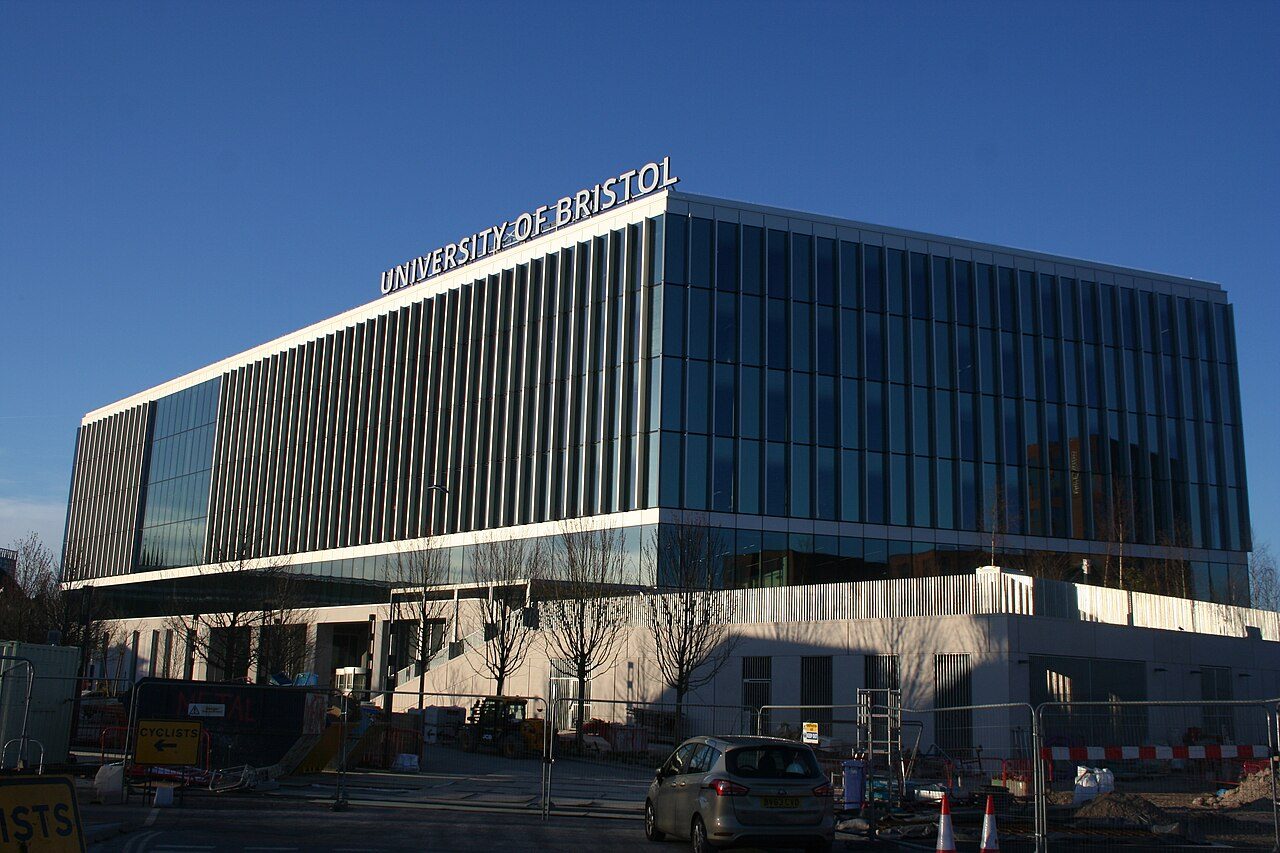
Bristol's tech scene came out of 2025 with two big physical anchors it did not have before: Isambard-AI, the £225 million national AI supercomputer switched on in July 2025 at the Bristol and Bath Science Park, and the University of Bristol's £500 million Temple Quarter Enterprise Campus, which opened beside Temple Meads in September 2026. Around them sits an older cluster of chip designers, robotics labs, creative technology studios and startup incubators that goes back to the 1970s. This guide explains where the activity is, who runs the main hubs, which skills the sector says it is short of, and what to check before you move, hire or start a company here.
Bristol tech at a glance
- AI computing: Isambard-AI was launched on 17 July 2025 by Peter Kyle, then Secretary of State for Science, Innovation and Technology. It runs on 5,448 NVIDIA GH200 Grace Hopper superchips and, at launch, ranked 11th fastest in the world and 6th in Europe.
- New campus: the Temple Quarter Enterprise Campus opened on 7 September 2026 with about 4,500 students and 650 staff, teaching business, digital engineering, AI, cyber security, advanced telecommunications and quantum technologies.
- Startup base: Engine Shed, in Brunel's old station building at Temple Meads, has run as an innovation hub since December 2013.
- Robotics: the Bristol Robotics Laboratory at UWE's Frenchay campus has more than 450 academics, researchers and industry practitioners.
- Creative technology: the Pervasive Media Studio at Watershed on the harbourside is a partnership between Watershed, UWE Bristol and the University of Bristol.
- Main annual event: the city's tech festival now runs as Brazen, from 9 to 13 November 2026 (checked October 2026).
Where the hubs are
The brief we worked from describes the scene as spread across districts rather than one cluster. That holds up, but the map is more specific than "the city centre and the north fringe".
Temple Quarter
This is now the densest point. The Bristol Temple Quarter Enterprise Zone was announced in March 2011, launched in 2012 and covers about 70 hectares around the station, aimed at creative, high-tech and low-carbon businesses. Engine Shed lists 18 offices, three coworking spaces, four event spaces and five meeting rooms at Station Approach, BS1 6QH, and is part of Bristol Innovations, linked to the University of Bristol. Its partners include SETsquared Bristol, techSPARK, the British Business Bank and the university's Quantum Technologies Innovation Centre.
Across the tracks, the new campus building is the Sloane Robinson Building, named after alumnus Hugh Sloane and the Sloane Robinson Foundation, whose £20 million gift is the largest individual donation in the university's history. It opened alongside a £23 million eastern entrance to Temple Meads and a new harbour walkway for walking and cycling. The West of England Mayoral Combined Authority put £35 million into a Bristol Innovations Zone on the campus, described by the university as a deep tech hub linking industry and investors with university research. The Bristol Digital Futures Institute is also based there, with more than £29 million invested in its research facility.
Harbourside
The Pervasive Media Studio is at Watershed, 1 Canons Road, BS1 5TX. It is a shared home for early creative technology ideas and companies, with themes ranging from interactive documentary and performance to robotics and social tech. Watershed itself is a registered charity.
The eastern and northern fringe
Isambard-AI sits at the National Composites Centre site on the Bristol and Bath Science Park at Emersons Green, which offers serviced offices, virtual offices and development plots for science and technology firms. The Bristol Robotics Laboratory is at T Block, Frenchay Campus, Coldharbour Lane, BS16 1QY, and is run jointly by UWE Bristol and the University of Bristol. It describes itself as the most comprehensive academic centre for multidisciplinary robotics research in the UK and runs a Robotics Innovation Facility for businesses.
How the cluster grew
Bristol's reputation in chips is older than most people assume. The Silicon Gorge name, taken from the Avon Gorge, covers a triangle between Bristol, Swindon and Gloucester, and the semiconductor story is usually dated to 1972, when Fairchild Semiconductor opened a design office in Bristol.
techSPARK's history of the Bristol and Bath tech sector traces the line from there:
- INMOS was set up in 1978, sold to Thorn EMI for £192 million in 1984 and to what became STMicroelectronics in 1989.
- HP Labs opened in Bristol in 1985, its first research centre outside the US.
- IMDb started in 1990.
- Element 14 was founded in 1999 by former INMOS engineers and bought by Broadcom for $600 million in 2000.
- XMOS was spun out of the University of Bristol in 2005, and Graphcore spun out of XMOS in 2016.
- Icera was sold to Nvidia in 2011 for $367 million.
- OVO Energy and Graphcore both reached unicorn status in 2020.
Graphcore, founded by Nigel Toon and Simon Knowles and still headquartered in Bristol, agreed in July 2024 to be acquired by SoftBank Group for around $500 million. Arm opened a Bristol office in 2023.
The pattern matters for anyone job hunting. Many Bristol employers are hardware, silicon or deep tech firms descended from that INMOS lineage, so electronics, embedded software and chip design roles are a bigger share of the market than in most UK cities.
What Isambard-AI changes
Isambard-AI was built by the Bristol Centre for Supercomputing in under 18 months, against the three to five years such systems usually take. A university technical write-up, Lifting the lid on Isambard-AI, says it runs on a 5 MW power supply with direct liquid cooling, designed so that waste heat could be recovered for industrial or district heating. By early 2025 nearly 60 research projects had used about 100,000 GPU hours on the first phase.
At the launch, Professor Simon McIntosh-Smith, director of the Bristol Centre for Supercomputing, said it "places Bristol at the centre of the AI revolution". The machine is part of the government's AI Research Resource, so access runs through national allocation rather than local membership. For local firms the more practical effect is the talent and research work that grows up around it. Researchers and companies interested in using it are invited to contact the centre directly.
Skills the sector is short of
techSPARK, the not-for-profit growth network for Bristol and Bath, publishes an annual State of the Sector report covering jobs, investment and gross value added, now in its third edition (December 2025). Its headline challenges are a "scaleup capital bottleneck", talent progression, because companies struggle to keep mid-level and senior staff in the face of London competition, and an opportunity to scale the region's virtual production and immersive companies for export. Download the full report for the figures; we have not reproduced numbers we could not check against it.
The new campus gives a clear signal of where the universities see demand. Its teaching areas (AI, cyber security, digital engineering, telecoms and quantum) line up with techSPARK's focus topics for 2026 roundtables: AI hardware and adoption, impact-led entrepreneurship and deep tech commercialisation in quantum, robotics and engineering biology.
For people retraining, the West of England Combined Authority funds free Skills Bootcamps. One delivery partner, YTKO, describes West of England Skills Bootcamps as free courses of up to ten weeks, funded and managed by the combined authority. Course lists and eligibility change each funding year, so check current intakes before you apply (checked October 2026).
Practical steps for newcomers
- Pick a hub before a postcode. Temple Quarter suits rail commuters and startup work. Frenchay and Emersons Green suit robotics, composites and computing roles but are a long cross-city trip from south Bristol.
- Use Engine Shed's Members' Lounge. Brazen attendees get free access to it during festival events, which is an easy way to see the building and meet tenants.
- Go to Brazen in November. Organised by SPARK South West, it grew out of the Bristol Technology Festival and runs over five days and four tracks.
- Ask about residencies. The Pervasive Media Studio takes enquiries at [email protected] for people working on creative technology ideas.
- Read the sector report first. techSPARK's report is the most current regional overview and is free to download.
What to check before you commit
- Company status. Bristol's history is full of acquisitions (INMOS, Element 14, Icera, Graphcore). Check who owns an employer now and where decisions are made, using Companies House and recent press.
- Grant and programme rules. Combined authority, university and incubator programmes change each financial year. Read the current eligibility page rather than older blog posts.
- Opening hours and access. The Temple Quarter campus and Temple Meads eastern entrance are new, and routes around the station are still settling. Check the university's Temple Quarter campus pages for public spaces and visitor access.
- Pay benchmarks. We have not quoted salary figures because no current primary source we checked publishes them for Bristol. Compare several live job adverts for the same role and seniority.
- Expectations. No hub, festival or programme guarantees investment or a job. Treat them as places to meet people and test an idea.
Frequently asked questions
Is Bristol a good city for tech jobs?
It has an unusually deep base in silicon, robotics and creative technology, plus new AI and campus investment since 2025. The sector itself names staff retention against London pay as a weakness, so compare offers carefully.
Where do tech startups work in Bristol?
The best-known base is Engine Shed at Temple Meads, home to SETsquared Bristol and other programmes. Creative technology teams often start at the Pervasive Media Studio, and science firms use the Bristol and Bath Science Park.
What happened to the Bristol Technology Festival?
It now runs as Brazen, a five-day festival of technology, creativity and culture, from 9 to 13 November 2026.
For more city guides, visit Bristol Society.